
Replacing Outdated Conductors Before Failure Occurs
Rewiring in the Phoenix-Metro Area for whole-home electrical system upgrades that replace aluminum, cloth-insulated, or undersized wiring with code-compliant copper circuits
Homes built before 1980 in the Surprise area often contain aluminum branch wiring, cloth-insulated conductors, or undersized panels that can't support modern appliance loads without overheating connections or tripping breakers repeatedly. Rewiring involves removing outdated conductors and replacing them with properly sized copper runs, upgrading the breaker panel to current capacity standards, and testing the entire system post-installation to verify voltage stability and ground continuity. Connect Electric Solutions coordinates rough-in access with drywall contractors to minimize wall damage, routing new conduit through attics and crawl spaces where possible to avoid extensive patching and repainting.
The process starts with evaluating which circuits require replacement based on wire condition, insulation integrity, and load capacity relative to current demands. Aluminum wiring creates fire risk at termination points where dissimilar metals corrode and loosen over time, while cloth-insulated conductors degrade and expose bare copper within walls. Undersized panels lack breaker slots for dedicated appliance circuits and can't deliver adequate amperage when multiple high-load devices operate simultaneously.
Arrange a property assessment to identify which circuits require immediate replacement and what panel capacity your home needs for current and future loads.
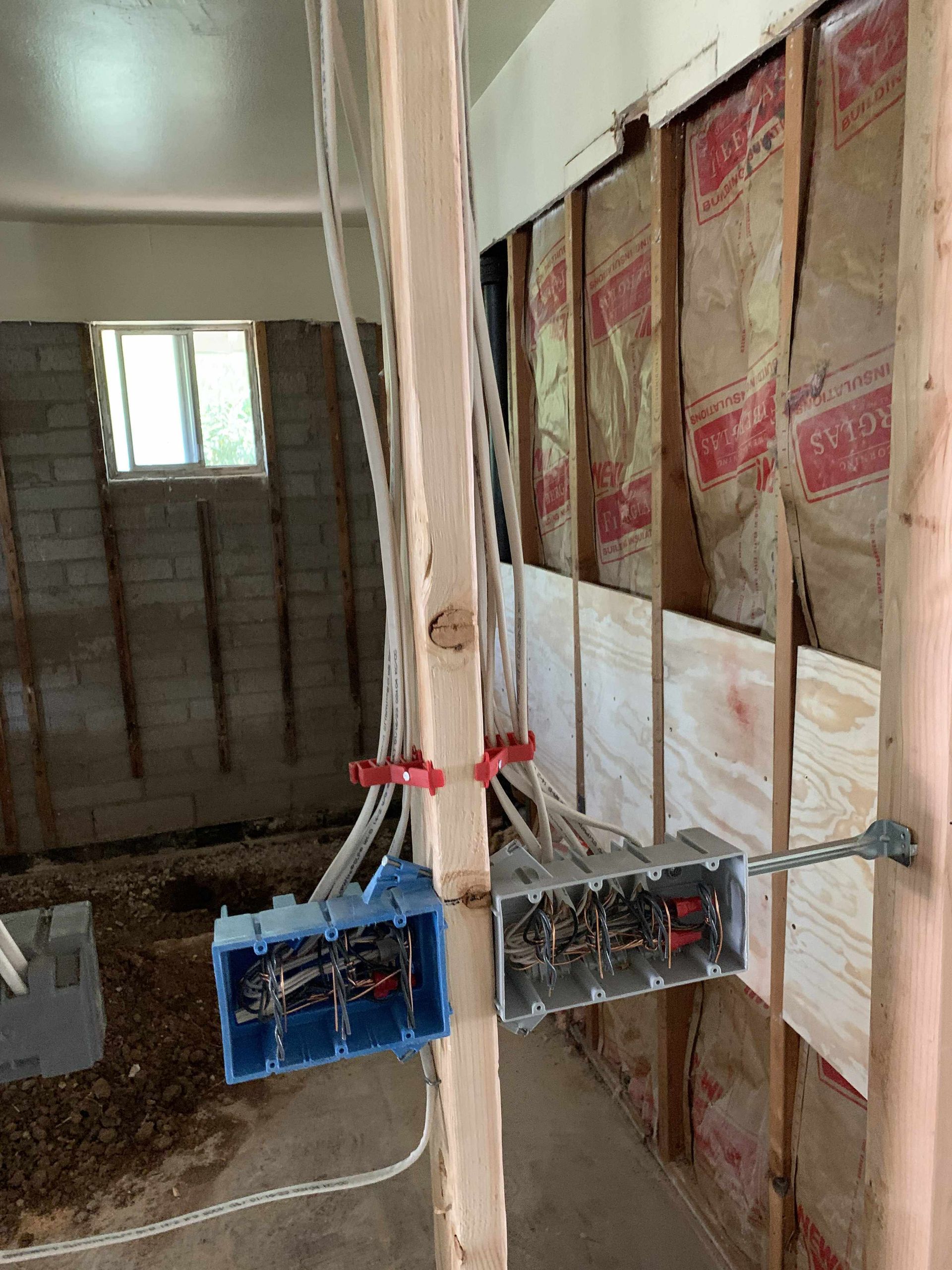
What Proper Rewiring Requires
Whole-home rewiring includes pulling new copper conductors through existing conduit where possible, installing new conduit runs where old pathways can't accommodate modern wire gauges, and replacing all outlet and switch boxes that don't meet current grounding requirements. The panel upgrade involves installing a modern breaker box with adequate slots for dedicated circuits, properly sized main breakers, and arc-fault protection on bedroom circuits as required by Arizona code. Each circuit receives torque-spec terminal connections that prevent overheating under continuous load, and the entire system is tested for voltage drop and ground integrity before energizing.
After rewiring completes, you'll notice breakers that don't trip under normal appliance loads, outlets that deliver stable voltage without dimming lights when motors start, and the absence of burning odors or warm outlet covers that indicated failing connections in the old system. Modern GFCI and AFCI protection prevents ground faults and arc faults from causing shock or fire, and adequate circuit capacity allows simultaneous operation of air conditioning, kitchen appliances, and laundry equipment without overload.
The scope includes coordinating with drywall and framing contractors to sequence access for conduit runs, scheduling municipal inspections for concealed wiring before walls close, and completing final inspection after all devices are installed. Permit management is handled as part of the service, ensuring that all work meets code requirements before the home's electrical system is returned to full operation.
What Property Owners Usually Ask
Rewiring projects involve significant coordination with other trades and require understanding what the work entails before committing to the scope and timeline.
How do you know if a house needs complete rewiring?
Indicators include aluminum branch wiring visible at outlets and switches, cloth or rubber insulation on conductors instead of modern plastic jackets, breakers that trip frequently under normal loads, or panels with fewer than 100-amp service capacity and insufficient breaker slots for dedicated circuits.
What does the rewiring process involve for occupied homes?
The electrician sequences work by floor or zone to maintain partial power during installation, energizing completed circuits before starting the next section; coordination with your schedule minimizes disruption and ensures essential areas like kitchens and bathrooms remain functional as much as possible.
Why is aluminum wiring a fire hazard?
Aluminum expands and contracts more than copper under thermal cycling, causing terminal connections to loosen over time; the oxidation that forms at loose connections creates high resistance, which generates heat and can ignite surrounding materials inside walls or junction boxes.
How much wall damage does rewiring cause?
Access requirements depend on whether new conduit can route through attics, crawlspaces, and basements or must penetrate finished walls; the electrician coordinates with drywall contractors to plan access points that minimize patching, often using existing outlet and switch locations where possible.
When does inspection happen during rewiring?
Municipal inspection occurs after rough-in is complete but before walls close, allowing the inspector to verify wire sizing, grounding, and junction box installation; final inspection happens after all devices are installed and the system is energized, confirming code compliance before issuing approval.
Connect Electric Solutions manages permit filing and inspection scheduling for whole-home rewiring projects, ensuring that all work meets Arizona electrical code standards and passes municipal review on first inspection. Schedule a property evaluation to determine which circuits require replacement and what panel capacity your home needs to support modern electrical demands safely.